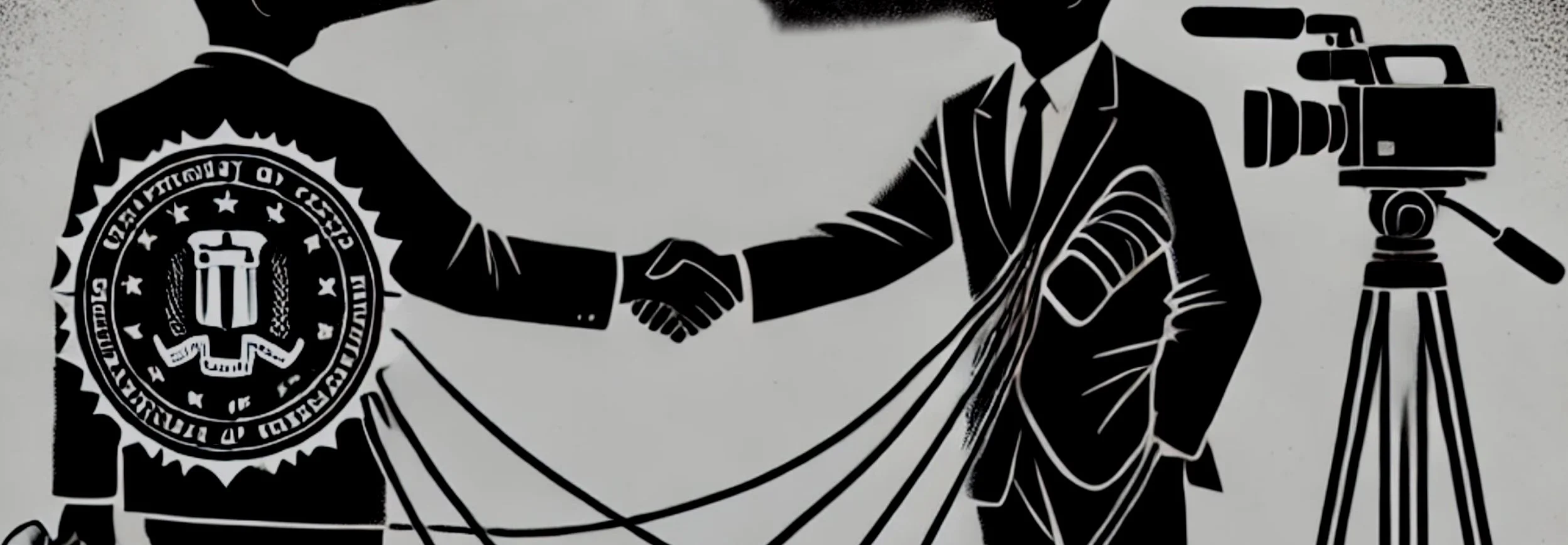
MeToo and Media Takedown
Flawed Reporting on OneTaste and the Perils of Sensationalism
Beginning in 2017, a convergence of events signaled a dramatic shift in OneTaste’s trajectory as a business and coincided with a sea change in societal attitudes toward sex and consent. At the heart of the storm was the intersection of OneTaste’s evolving leadership, the rise of the MeToo movement, and a growing appetite for exposing misconduct in corporate and cultural institutions. Yet, in the case of OneTaste, much of the media coverage—and the broader narrative that ensued—may have done more to obscure the truth than to reveal it. Examine the chain of evidence, the media coverage by Bloomberg, The BBC, and Netflix, and the unverified reporting used to produce what becomes a historic federal indictment.
OneTaste’s
Leadership Transition and Crisis Management:
A Precursor to Media Scrutiny
In early 2017, OneTaste underwent a significant leadership transition that would shape its trajectory in the years to come. Founder Nicole Daedone announced her decision to step down as CEO, citing her desire to focus on writing and creative projects. In her place, a group of longtime students—Anjuli Ayer, her brother Austin, and Amanda Dunham—stepped forward with plans to purchase the business. By March 2017, the sale was finalized, transferring ownership of OneTaste and its intellectual property to the group. As part of the sale agreement, Daedone agreed to indemnify the new owners against reputational damage linked to her tenure—a clause that would later prove pivotal.
Proactive Steps for Reputation Management:
-
Although the internal audit and strategic preparation were well underway, plans for a public "tell all" narrative were ultimately shelved. Instead, Trident DMG shifted focus to positioning OneTaste as a business success story. Efforts were made to emphasize the company’s evolution from a small community venture to a fast-growing, women-led enterprise at the forefront of sexuality and wellness. In late 2017, Trident DMG facilitated an introduction between OneTaste leadership and Bloomberg Businessweek journalist Ellen Huet. The objective was clear: to showcase OneTaste’s growth and its role as a trailblazer in the industry.
-
The resulting Bloomberg article, however, took an unexpected turn. While initial discussions with Huet focused on OneTaste’s business achievements and cultural innovations, the final piece shifted dramatically in tone. Instead of celebrating OneTaste’s growth, the article painted a damning portrait of the organization, characterizing it as exploitative and cult-like. This pivot not only undermined Trident DMG’s strategy but also marked the beginning of a sustained wave of negative media attention that would overshadow OneTaste’s narrative for years to come.
-
The leadership transition and subsequent efforts to manage OneTaste’s reputation marked a pivotal moment in the company’s history. While proactive measures like the internal audit and engagement with Trident DMG reflected a willingness to address challenges head-on, the fallout from the Bloomberg article underscored the difficulty of navigating public perception in an era of heightened scrutiny. For OneTaste, these early steps in 2017 would set the stage for a prolonged battle over its legacy—a battle shaped as much by the media’s portrayal as by the company’s own efforts to define its story.
MeToo and the Societal Storm
That Shaped OneTaste’s Narrative
Amidst the rapid changes at OneTaste, a broader societal storm was brewing. In October 2017, the Harvey Weinstein scandal erupted, unleashing a media firestorm that not only brought down Weinstein and his company but also sent shockwaves through the entire entertainment industry and beyond. The scandal acted as a catalyst for the #MeToo movement, reigniting conversations about sexual misconduct, power dynamics, and accountability in workplaces across the globe.
While the term “#MeToo” had been coined over a decade earlier by activist and sexual assault survivor Tamara Burke, it was actor Alyssa Milano’s viral tweet in October 2017 that catapulted it into the public consciousness. Milano encouraged survivors to share their experiences by simply replying, “Me too.” The response was immediate and overwhelming: within a week, more than twelve million replies and retweets flooded social media, transforming a grassroots movement into a global phenomenon.
The #MeToo movement reached another peak in October 2018, during the contentious confirmation hearings of Supreme Court nominee Brett Kavanaugh, who faced allegations of sexual assault. A Google Trends analysis shows that searches for “#MeToo” reached their highest point during this period, underscoring how deeply embedded the movement had become in the cultural landscape.
For OneTaste, this societal reckoning with issues of consent and power posed both opportunities and challenges. As a company at the frontier of conversations about sexuality, intimacy, and empowerment, OneTaste was uniquely positioned to contribute to the evolving discourse. Yet, the movement’s broader momentum also brought heightened scrutiny to organizations operating in these sensitive spaces. In this charged atmosphere, the complexities of OneTaste’s mission risked being reduced to oversimplified narratives, as media coverage increasingly sought stories that fit the #MeToo framework of misconduct and exploitation.
The Weinstein scandal and the rise of #MeToo reshaped not only the entertainment industry but also the cultural context in which organizations like OneTaste operated. As public demand for accountability grew, so too did the challenge of navigating the fine line between addressing valid concerns and resisting sensationalized portrayals. In the years that followed, this tension would come to define much of the media’s engagement with OneTaste
The Bloomberg Bombshell
In June 2018, Bloomberg published a story by reporter Ellen Huet titled "The Dark Side of the Orgasmic Meditation Company." The article cast OneTaste as a cult-like organization that preyed on vulnerable individuals, exploiting them financially, spiritually, and sexually. While the piece generated widespread media attention, many of its core allegations fell apart under scrutiny.
One key example involved claims from former employee Ayries Blanck, who, according to “people familiar with the matter,” alleged that she had been coerced into sexual activities as part of her role. Bloomberg cited an anonymous source claiming that OneTaste settled a labor dispute with Blanck in 2015 for $325,000, but the story failed to substantiate these claims with any documentary evidence or corroborating witness testimony.
Blanck herself declined to comment for the story. Yet, despite the lack of direct evidence, Huet described Blanck’s allegations as fact, leaning heavily on vague attributions like “people familiar with the matter.” The article also failed to explain how these unnamed individuals were privy to Blanck’s claims, raising serious questions about the reliability of the information presented.
-
In contrast to Huet’s portrayal, OneTaste conducted its own interviews with individuals directly involved in the events described. Two men whom Blanck later accused of misconduct vehemently denied the allegations, and a sworn statement from Blanck’s closest friend at OneTaste further contradicted the claims. According to the statement, Blanck not only failed to report any non-consensual encounters during her time at OneTaste but also openly expressed enjoyment of those experiences, as evidenced by text messages exchanged at the time.
Additional inconsistencies in Huet’s reporting emerged. The so-called "manager" alleged to have coerced Blanck was not, in fact, her supervisor or someone with authority over her employment. Moreover, Blanck herself had publicly documented her enjoyment of a voluntary encounter with this individual in online forums, even requesting to share her account on a public-facing blog.
The demand letter referenced in Huet’s article, which purportedly detailed Blanck’s allegations, did not contain the claims described in the article. This discrepancy raises a critical question: how did Huet authenticate the content of the letter, and why was the lack of corroboration overlooked?
-
Huet’s reliance on anonymous sources and unverified claims reflects a broader issue in media coverage of OneTaste. The most alarming allegations—such as coercion and assault—were presented without the rigorous follow-up necessary to substantiate such serious accusations. No texts, emails, recordings, or police reports were cited as evidence, leaving readers with a narrative that relied heavily on implication rather than proof.
This lack of due diligence is particularly troubling in stories involving sexual misconduct, where the stakes are high, and the need for careful corroboration is paramount. Without concrete evidence, such reporting risks undermining the credibility of genuine survivors and contributing to a climate of distrust.
-
The Bloomberg article’s sensationalist framing not only damaged OneTaste’s reputation but also overshadowed the legitimate questions about its business practices and cultural impact. By focusing on unproven allegations, the media failed to explore the broader nuances of OneTaste’s mission, from its innovative approach to intimacy and empowerment to its internal efforts to address challenges and evolve.
In the rush to tell a dramatic story, the media abandoned its responsibility to present a balanced account. The result was a narrative that, while compelling, lacked the depth and integrity needed to provide meaningful insight into OneTaste’s complexities.
-
The story of OneTaste is not one of clear-cut heroes and villains. It is a story of ambition, experimentation, and the challenges of operating at the intersection of business, intimacy, and empowerment. The flawed media coverage surrounding OneTaste serves as a cautionary tale about the dangers of sensationalism and the importance of journalistic rigor—particularly in an era when the court of public opinion often holds more sway than the facts themselves.

OneTaste & Bloomberg:
Recanting Sources, Standards Violations, and the Ethics of Investigative Journalism
The saga of OneTaste and its contentious portrayal in the media—particularly Bloomberg Businessweek’s 2018 article, “The Dark Side of the Orgasmic Meditation Company”—has raised serious questions about journalistic integrity, source reliability, and the ethics of media sensationalism. Despite significant evidence challenging the core allegations presented in the article, Bloomberg has steadfastly refused to amend or retract the piece, leading to ongoing scrutiny of its editorial practices.
The Bloomberg article painted a damning picture of OneTaste as an exploitative, cult-like organization. It accused the company of using manipulative tactics to coerce employees and clients into financial, emotional, and sexual exploitation. This depiction not only ignited a firestorm of criticism but also laid the foundation for subsequent media coverage, much of which relied heavily on the original Bloomberg piece.
However, over time, cracks began to appear in the narrative. Sources recanted, evidence contradicted key claims, and OneTaste leadership repeatedly pointed out glaring ethical and journalistic lapses in the article’s reporting and publication process.
Dive Into The Details:
-
2017–2018: The Initial Reporting and Publication
In the lead-up to publication, OneTaste provided Bloomberg’s staff, editors, and legal team with extensive materials, answering numerous questions about its culture, business practices, and allegations of misconduct. Despite this, the final article omitted key context and failed to accurately represent OneTaste’s responses.For Bloomberg, the OneTaste controversy presents an opportunity to re-evaluate its editorial processes and restore public trust by addressing the valid concerns raised in Ayer’s letter. Whether the organization chooses to amend or defend the article will serve as a litmus test for its commitment to journalistic integrity.
Post-Publication: Sources Recant and Concerns Mount
September 29, 2020: Ellen Huet, writing from her personal email account, reached out to former OneTaste executives Nicole Daedone, Anjuli Ayer, and Joanna Van Vleck. In her email, Huet expressed admiration for OneTaste’s positive impact on many lives and blamed her editor for the one-sided nature of her article. She requested their participation in a forthcoming book, suggesting the book would lack a “fuller truth” without their input.
April 1, 2021: Huet contacted Daedone on Instagram, reiterating her belief that OneTaste had been “deeply misunderstood by the public” due to its radical approach to sex, spirituality, and wellness. She praised the company’s vision of elevating women’s power and asked again for Daedone’s participation in her book.
November 2022: A key source for Huet’s article, identified as “Summer,” recanted her statements. Summer texted Huet directly, asserting that she no longer stood by her interview and that her input had been tainted by a vendetta against OneTaste from another source, Ayries Blanck. Huet declined to update or amend her story.
-
In a confidential letter dated July 26, 2022, OneTaste CEO Anjuli Ayer called into question the accuracy, integrity, and editorial oversight behind Bloomberg journalist Ellen Huet’s 2018 article. The letter, addressed to Bloomberg’s Global Standards Editor Laura Zelenko, outlines detailed allegations of journalistic and editorial misconduct, providing evidence that challenges Huet’s claims and raises significant questions about Bloomberg’s adherence to its own reporting standards.
The Core Criticism: A Misleading Narrative
Ayer’s letter asserts that Huet’s article portrayed OneTaste as a coercive, exploitative, cult-like organization by relying on unsubstantiated anecdotes, misattributed sources, and selective omission of key facts. OneTaste argues that this depiction deviates so far from reality that it effectively transforms the article into a “work of fiction.” The letter identifies major inaccuracies, ethical violations, and a lack of editorial oversight as the root causes of the article’s misleading portrayal.
Among the most significant claims made in the letter are:
Selective Use of Sources: Ayer accuses Huet of relying on anonymous sources who lacked direct knowledge of events, while ignoring individuals with firsthand information that contradicted her narrative. For example, Huet’s claim that OneTaste encouraged a staff member to shirk his parental responsibilities was directly refuted by both the individual in question and his co-parent—neither of whom were adequately represented in the article.
Unsubstantiated Allegations of Sexual Misconduct: The article alleges that former employee Ayries Blanck was coerced into sexual acts by OneTaste staff. Ayer counters that sworn statements, contemporaneous text messages, and testimony from Blanck’s closest friends refute these claims, characterizing her sexual encounters as consensual and initiated by her. Huet’s reliance on “people familiar with the matter” is critiqued as misleading, as these individuals were merely recounting Blanck’s later interpretations, not firsthand accounts of events.
Mischaracterization of Relationships: The article claims that OneTaste pressured women to “hook” wealthy men to pay for courses, citing a staffer who allegedly encouraged a member to solicit financial support from a tech worker. Ayer reveals that the man in question was the woman’s romantic partner and future husband, a fact Huet omitted despite her apparent personal familiarity with him. This omission, Ayer argues, paints a distorted picture of the relationship and unfairly implicates OneTaste in unethical practices.
Cult Allegations Built on a Single Anecdote: Ayer challenges Huet’s framing of OneTaste as a cult, which relies heavily on the account of one individual who felt “compelled” to marry within the organization. Evidence provided by OneTaste, including sworn statements and contemporaneous messages, demonstrates that the organization’s staff actively discouraged the rushed marriage, contradicting Huet’s narrative.
-
The letter draws heavily on The Bloomberg Way, the organization’s internal guide to journalistic ethics, to highlight Huet’s and her editors’ apparent deviations from professional standards. Key violations include:
Failure to Corroborate Sources: Huet relied on secondhand accounts and unverified claims, failing to gather testimony from witnesses with direct knowledge of events. This omission undermines the credibility of the allegations she presented.
Misleading Attribution: By citing “people familiar with the matter,” Huet implied corroboration that did not exist. Ayer argues that this language created the illusion of multiple sources confirming misconduct, when in reality these sources merely repeated allegations made by others.
Selective Omission of Exculpatory Evidence: Ayer notes that Huet ignored testimony and evidence provided by individuals who praised OneTaste’s impact and disputed the negative claims. This includes the organization’s scientific research and its policies on consent and ethical behavior, which were omitted from the article.
Potential Conflicts of Interest: The letter raises concerns about Huet’s personal relationship with a source, which was not disclosed in the article. This relationship may have influenced the narrative direction and undermines the article’s perceived objectivity.
-
The letter emphasizes the far-reaching consequences of Huet’s reporting. By positioning itself as an exposé, the article became the foundation for subsequent media portrayals of OneTaste, including subsequent coverage by the BBC, VICE and Netflix. Ayer notes that these derivative works have perpetuated the inaccuracies in Bloomberg’s reporting, compounding the reputational harm caused by the original Bloomberg piece.
Furthermore, the article has had a direct and lasting impact on former OneTaste staff and leadership, who continue to face public scrutiny, professional repercussions and ultimately legal jeopardy based on media allegations that OneTaste insists are false.
-
In the letter, Ayer calls for the removal of Huet’s article from Bloomberg’s platforms, citing Bloomberg’s continuing obligation to uphold journalistic standards. She offers to provide evidence—including sworn statements, contemporaneous messages, and financial records—to substantiate her claims and demonstrate the inaccuracies in Huet’s reporting.
The letter concludes by appealing to Bloomberg’s reputation as a trusted news source, urging the organization to correct the record and prevent further harm caused by the article’s publication.
-
Ayer’s letter raises serious questions about the standards of investigative journalism at Bloomberg. While sensational exposés often draw attention, the allegations of biased reporting, selective omission, and ethical lapses in Huet’s article highlight the potential risks of prioritizing salacious narratives over rigorous fact-checking and balanced reporting.
For Bloomberg, the OneTaste controversy presents an opportunity to re-evaluate its editorial processes and restore public trust by addressing the valid concerns raised in Ayer’s letter. Whether the organization chooses to amend or defend the article will serve as a litmus test for its commitment to journalistic integrity.
In November 23, 2022: Ayer sent a follow-up letter to Bloomberg Editor-in-Chief John Micklethwait, asserting that Bloomberg’s refusal to correct or retract the article violated its own journalistic standards.
In response, Bloomberg has maintained its position. In a letter dated December 4, 2022, Zelenko stated, “We continue to stand by the current version of the story… Our sourcing was and remains deep.”
-
Huet’s subsequent public statements and appearances have further fueled controversy:
On the Dead Cat Podcast (August 23, 2022), Huet remarked that she would like to see “more diversity in villains” and referenced female founders making bad decisions, a statement critics argue reflects a bias in her portrayal of OneTaste’s leadership.
Huet appeared as a commentator in Netflix’s Orgasm Inc. (October 28, 2022), credited as a Bloomberg journalist, despite questions about the reliability of her reporting.
The Broader Implications: Journalism and MeToo
The OneTaste story highlights the tension between the legitimate need to expose misconduct and the ethical responsibility to ensure accuracy and fairness. In the #MeToo era, journalists are under increased pressure to hold powerful entities accountable. However, when stories rely on sensationalism and unverified claims, they risk undermining the credibility of the movement they seek to support.
Bloomberg’s refusal to amend or retract its article—despite recanted sources and documented inconsistencies—raises troubling questions about accountability in modern journalism. For OneTaste, the stakes are more than reputational. The flawed reporting has cast a long shadow over its mission, leaving many to wonder how different the narrative might have been if journalistic rigor had prevailed over sensationalist storytelling.
BBC
The Orgasm Cult Podcast
Thin Evidence and Journalistic Shortcomings in the Case Against OneTaste
In 2020, BBC journalist Nastaran Tavakoli-Far released a ten-part podcast miniseries provocatively titled “The Orgasm Cult.” The series promised to expose the inner workings of OneTaste, focusing on allegations that the organization pressured members into unwanted sexual activities and manipulated them into purchasing expensive personal development courses. While the series garnered attention and raised serious questions about OneTaste’s practices, it also exposed significant shortcomings in its journalistic rigor, particularly in its handling of the most damning allegations.
-
One of the podcast’s central allegations comes from a pseudonymous source, “Max,” who recounts secondhand claims about a former OneTaste member, “Cassidy.” According to Max, Cassidy endured horrific abuse, including repeated beatings and rapes by her boyfriend and alleged gang rape orchestrated by OneTaste members to "release her orgasm." These shocking claims formed a cornerstone of the podcast's narrative, yet they raise immediate concerns about corroboration.
Notably, Tavakoli-Far did not attempt to contact Cassidy directly or verify Max’s account with first-hand sources. Critical figures—including Cassidy’s boyfriend, alleged assailants recruited from a dating site, and Cassidy’s friends and roommates—were never interviewed. Even the dating site where the alleged attackers were supposedly found was not consulted to verify Cassidy’s account. The lack of effort to substantiate these claims with direct evidence undermines their credibility and calls into question the podcast’s journalistic standards.
-
The series reached its dramatic apex in Episode 9, where it introduced a source identified only as “Max.” According to the podcast, Max, who purportedly worked with OneTaste, relayed troubling allegations about a woman referred to as “Cassidy.” Max claimed Cassidy endured sustained physical abuse and rape at the hands of her boyfriend, “Sam,” while OneTaste leadership allegedly turned a blind eye and even instructed staff to remain silent.
Central to this claim was an email that the BBC described as evidence of OneTaste’s complicity. Tavakoli-Far read an excerpt of the email, asserting it was sent by OneTaste’s lawyer to staff members, instructing them not to discuss the alleged abuse or involve law enforcement. This email, the podcast implied, was definitive proof of a cover-up.
However, nearly two years after the podcast's release, the BBC quietly retracted this supposed evidence. On November 11, 2022, following legal action by OneTaste and its leaders, the BBC admitted that the email did not reference Sam, Cassidy, or any incident remotely connected to the claims in the podcast. Simple fact-checking would have revealed this critical discrepancy from the outset, yet the podcast continued to present the email as a linchpin of its narrative.
The significance of this misstep cannot be overstated. Not only was this email the only piece of documentary evidence cited in the entire series, but it was also central to supporting the broader allegations of abuse, negligence, and complicity within OneTaste. Without it, the claims rest entirely on anonymous accounts and unverifiable anecdotes.
-
Contrary to the podcast's claims, the email in question related to an incident between two private individuals who occasionally attended OneTaste events. After one of the individuals reported feeling distressed at a free public event, OneTaste staff promptly intervened, banned the alleged perpetrator from future events, and offered the complainant the option to contact the police. The email, which was written following consultation with a civil rights attorney, urged staff to avoid pre-judging the situation or publicly discussing the incident.
Far from evidence of a cover-up, the email demonstrates a measured and responsible approach to handling a sensitive situation. Yet the BBC misrepresented it as proof of institutional wrongdoing, compounding the damage to OneTaste's reputation.
-
This retraction exposes broader issues with The Orgasm Cult’s journalistic approach. The podcast relied heavily on anonymized sources, second-hand accounts, and insinuations to build its case. For instance, Max’s recounting of Cassidy’s alleged abuse was prefaced by phrases like “Cassidy tells a story,” without any indication that he had spoken to her directly. Listeners were left to infer the veracity of claims that may have been several degrees removed from the truth—or entirely fictional.
Adding to the credibility gap is the silence of Ruwan Meepagala, a prominent source featured in the series and a close friend of Cassidy and Sam during their time at OneTaste. Meepagala, who has spoken extensively about his experiences with the organization, has never corroborated the allegations of abuse described in Episode 9. His absence from the discussion raises further questions about the accuracy of the podcast’s claims.
-
While the BBC has removed the email reading from Episode 9, it has made no effort to prominently notify listeners of the retraction. The podcast website features a vague note stating, “This episode has been edited to remove reference to an email which was described as relating to a specific incident involving Sam and Cassidy.” This understated acknowledgment falls far short of addressing the seriousness of the error or explaining how such a fundamental misrepresentation occurred.
The lack of transparency is particularly troubling given the podcast’s reliance on this faulty evidence to make grave allegations of rape, abuse, and institutional neglect. Such claims, if substantiated, would represent significant moral and legal failings. Yet the BBC’s failure to meet basic standards of fact-checking and corroboration undermines its credibility and does a disservice to its audience.
Contradictory Evidence
from Firsthand Witnesses
Information provided by individuals with firsthand knowledge of Cassidy’s time at OneTaste directly contradicts the podcast’s depiction. Cassidy’s friends and roommates, as well as her boyfriend—whom she eventually married—dispute the claims of abuse. They describe Cassidy as a sexually assertive individual, citing text messages in which she expressed a desire to sleep with a different partner every day for a month. Furthermore, Cassidy was a skilled martial artist, while her boyfriend was described as mild-mannered and suffering from a neurodegenerative condition that rendered him physically fragile. These accounts paint a vastly different picture, suggesting that the allegations made in “The Orgasm Cult” may be exaggerated or entirely fabricated.
A Failure of Corroboration
Tavakoli-Far claims the podcast team reached out to OneTaste for comment, but the producers reportedly received no response. While this attempt at balance might seem sufficient on the surface, it does not absolve the broader failure to corroborate the more sensational claims. Investigative reporting, particularly on allegations of sexual assault, requires exhaustive effort to verify claims through firsthand accounts, documentary evidence, or law enforcement records. Tavakoli-Far did none of this.
Cassidy is never quoted directly in the podcast. There is no mention of contemporaneous law enforcement reports or complaints, and the FBI—despite reopening an investigation into OneTaste—has brought no charges related to the podcast’s allegations. Instead, Tavakoli-Far relies on Max’s recounting of Cassidy’s alleged experiences, concluding their veracity largely because Cassidy reportedly “cried” during the incidents. This flimsy basis for such severe accusations raises serious questions about the integrity of the reporting.
A Conspiratorial Tone
The podcast takes a distinctly conspiratorial tone, portraying OneTaste as a shadowy organization exploiting women’s sexual and financial vulnerabilities. Tavakoli-Far reserves particular ire for OneTaste founder Nicole Daedone, whom she vilifies with subjective and unnecessary physical descriptions—transforming, according to the journalist, from “a slightly nerdy woman wearing a frumpy blazer in her TED talk to this super-sleek blonde with toned arms.” Such characterizations do little to advance the investigation but instead suggest an intent to sensationalize.
A key accusation leveled against Daedone is that she pressured women into prostituting themselves to wealthy men to sell expensive courses. However, the podcast does not provide a single concrete example of such behavior, relying instead on insinuation and vague, unverified claims. This failure to back serious allegations with specific evidence further erodes the credibility of the podcast.
The podcast's central argument is that OneTaste functions as a cult, defined by its “non-mainstream views” and “intense devotion to a person or ideology.” However, this premise rests heavily on the testimony of a single individual, Michal, who claims the organization manipulated her life, finances, and even personal relationships. Michal recounts how her introduction to OneTaste led her to abandon her career, move into a communal living arrangement, and endure mandatory daily “orgasmic meditation” sessions—allegedly enforced without regard for her personal boundaries.
Yet, the podcast fails to explore conflicting accounts from other OneTaste members. For instance, a housemate of Michal’s reportedly told the BBC that Michal often missed the supposedly mandatory sessions due to her job as a teacher and had even requested the sessions be rescheduled to accommodate her work schedule. Such details, provided by OneTaste to the BBC, were excluded or glossed over in the series, leaving listeners with an incomplete picture of events.
The allegations become even murkier when considering Michal’s departure from her job and abrupt move into an OM house. Her brother, another voice in the podcast, paints this as evidence of coercion, claiming Michal left behind her furniture and her dog in a sudden upheaval. However, the series provides no concrete documentation that OneTaste pressured her to make these decisions. By omitting such nuance, the podcast risks reducing complex personal choices to a simplistic narrative of victimization.
More troubling is the series’ handling of serious allegations of sexual abuse within the OneTaste community. Journalist Nastaran Tavakoli-Far introduces Cassidy’s claims of rape with dramatic flair, describing the account as “very distressing.” Yet, she fails to contact key individuals accused of these actions, even though they are known within the community and have reportedly denied the allegations. The omission of their perspectives undermines the podcast’s credibility and raises ethical questions about its approach to investigative reporting.
The reliance on second-hand accounts and pseudonymous sources further weakens the series’ case. Beyond Michal’s testimony, Tavakoli-Far leans on vague, insinuating language and anonymous claims, offering little in the way of corroboration. This approach not only does a disservice to listeners seeking reliable information but also risks damaging the reputations of those accused without due process.
Tavakoli-Far’s personal connection to Michal, revealed in moments of candid reflection, further blurs the line between objective reporting and subjective interpretation. Her description of retreating with Michal into the “warm and reassuring” silence of the recording studio raises doubts about her impartiality. While such intimacy may enrich the storytelling, it risks misleading listeners into conflating emotional narrative with factual investigation.
Ultimately, “Orgasm Cult” raises critical questions about the standards of modern journalism. If the allegations against OneTaste are as grave as the podcast suggests—ranging from financial exploitation to serial rape—then they warrant thorough, evidence-based reporting. Without it, the series becomes less an exposé and more an exercise in dramatization, leaving its audience with little more than speculation and unverified claims.
The Fallout and Broader Implications
Despite its glaring flaws, “The Orgasm Cult” became a ratings hit for the BBC and reignited law enforcement interest in OneTaste. However, the lack of substantive evidence supporting the podcast’s most damning claims has raised concerns about its journalistic integrity. Tavakoli-Far’s reliance on secondhand accounts, her failure to seek out corroborating witnesses, and her reliance on innuendo rather than fact undermine the credibility of her reporting.
The broader implications are significant. While investigative journalism plays a critical role in exposing misconduct, stories that fail to meet basic standards of accuracy and fairness risk perpetuating misinformation and damaging the reputations of individuals and organizations without cause. In the case of “The Orgasm Cult,” the alarmist tone and unsubstantiated allegations leave room to question whether the story was driven more by a desire for sensationalism than by a commitment to uncovering the truth.
Netflix’s Orgasm, Inc.
A Fabricated Narrative Wrapped in Sensationalism

When Netflix released its true crime documentary Orgasm, Inc in October 2022, it marked yet another chapter in the ongoing media frenzy surrounding OneTaste, a controversial organization whose teachings on "orgasmic meditation" have provoked polarizing reactions. Building on earlier exposes by the BBC, Vice, and Playboy—each reiterating the initial allegations made in Bloomberg’s 2018 feature—the Netflix production sought to reframe the story with its own twist. However, Orgasm, Inc. raises serious questions about the ethics of documentary filmmaking, blending fact and fiction with theatrical dramatizations and selectively edited footage to promote a flawed narrative.
Netflix’s Orgasm, Inc
A Case Study in Misleading Cinematic Devices
Netflix’s Orgasm, Inc. employs a series of cinematic flourishes and creative editing that blur the line between reality and dramatization, creating a misleading portrayal of OneTaste. Through selective use of imagery, reenactments, and questionable narrative techniques, the film constructs an exaggerated environment of sexual intrigue that diverges significantly from the reality of OneTaste’s operations. Below are some key examples that highlight the problematic methods used in the film.
-
In one scene, former OneTaste student Chris Kosley is shown sitting in a dimly lit space resembling a BDSM dungeon. He describes the building as "the center 1074," explaining that it was a communal hangout space with a yoga studio and a classroom upstairs. However, the film misleads the audience by depicting a location unrelated to OneTaste, implying a connection to BDSM practices without any factual basis. The setting, paired with Kosley’s description of a "behind the red door quality," is edited to evoke a sense of secrecy and sexual deviance that has no bearing on the actual space used by OneTaste.
-
Another scene features disjointed commentary about “priests of orgasm” initiations, combining actual footage of OneTaste events with irrelevant stock imagery of tarot cards, nude Greek statues, and reenactments by actors. The seamless editing gives the false impression that these visuals represent authentic OneTaste practices. In reality, the events depicted in the footage had no connection to the concept of “priest initiations,” which appear to be entirely imagined by the filmmakers.
-
In perhaps the most ethically troubling example, Audrey Wright, a former OneTaste student and volunteer who is also credited as part of the film’s production team, is shown sitting at a dining table and speaking on the phone with an FBI agent. She is heard saying, “And so when that thing about them finding some strangers to rape her happened, totally made sense to me as far as what the conversation I heard and the behavior that I witnessed.”
The scene is accompanied by a text overlay claiming that Wright confirmed the alleged rape of Ayries Blanck to the FBI. Wright is also shown writing the name "McGinnis" on a pad—presumably referring to Elliott McGinnis, the lead FBI agent investigating OneTaste. However, the audience is left questioning the authenticity of the conversation. Was Wright truly speaking to an FBI agent, or was the call staged for the film?
The Convergence of Sensationalism and Fiction in the OneTaste Narrative
The Netflix documentary Orgasm, Inc., supported by Bloomberg reporter Ellen Huet and the government’s legal efforts, epitomizes a collaborative attempt to construct a dramatic narrative that blurs the lines between fact and fiction. Ellen Huet, whose initial 2018 Bloomberg article set the stage for the allegations against OneTaste, takes on a role in the documentary that mirrors the film’s broader approach: theatrical reenactments disguised as investigative reporting.
Huet’s portrayal includes a bizarre transition from a blank screen labeled “2018” to scenes of her “2022 self” playing the role of her earlier investigative persona. This dramatization echoes the fabrication involved in Ayries Blanck’s alleged journal, read aloud by her sister, Autymn, as if it were a contemporaneous record of events from 2015. The journal even references a book about “post-traumatic growth” published years after the described events—anachronisms that further question the authenticity of the documentary’s narrative devices.
In this conflation of fact and fiction, the documentary also enlists supposed "real" FBI Special Agents playing themselves in scripted scenes, making it impossible to discern whether viewers are witnessing actual investigative processes or dramatized simulations of them. By blending these elements into a “documentary” format, the film creates an evidentiary quagmire, where truth and performance are indistinguishable.
Fabrications as ‘Inculpatory Evidence’
The ambiguity and apparent fabrications in Orgasm, Inc. raise significant concerns as these media-created narratives are reportedly being used as “inculpatory evidence” in the government’s conspiracy charges against OneTaste. Rather than clarifying the truth, the interplay of Netflix, Bloomberg, and government collaborators has compounded confusion, perpetuating a story where the facts are overshadowed by sensationalism and coordinated media theatrics.
What emerges is not an impartial investigation or a pursuit of justice, but a tangled narrative jointly shaped by Netflix, Bloomberg, and government actors. Their collaboration not only muddies the waters of the OneTaste case but also highlights the troubling intersections of media sensationalism and legal proceedings. When journalistic integrity and judicial processes are compromised for the sake of drama, the ability to parse truth from fabrication becomes almost impossible, leaving audiences—and the accused—at the mercy of a story crafted to entertain rather than inform.
The OneTaste saga, as presented, underscores the dangers of using media fabrications to bolster legal cases. It calls into question the ethical responsibilities of journalists, filmmakers, and government agencies, whose roles should be rooted in uncovering the truth, not constructing it for dramatic effect.
Splice and Dice:
Netflix’s Manipulation
of Footage in Orgasm, Inc.
Netflix’s portrayal of OneTaste and its founder, Nicole Daedone, in Orgasm, Inc. raises significant ethical concerns regarding the manipulation of source material to create a misleading narrative. The platform relied on heavily edited clips from Daedone’s lectures, rearranged and stripped of their original context, to suggest that she condoned rape and violence. This selective editing undermines the integrity of the documentary and distorts the essence of OneTaste’s teachings.
-
Netflix argues that its depiction of OneTaste was reasonable based on statements made by Nicole Daedone during her lectures. Specifically, the company cites a brief, spliced-together excerpt of less than two minutes extracted from two separate lectures, which collectively lasted over two hours and fifty minutes. These lectures, delivered during the seventh month of a nine-month coaching program, were part of a broader curriculum designed to train certified life coaches. Over 1,400 people participated in this program, traveling from across the globe for weekend-long sessions in Los Angeles, New York, or London.
Netflix’s argument rests on a misrepresentation of Daedone’s remarks, specifically the following statement:
“The problem with the victim story, [is] it takes away your power. If you want to know the real way to deflect rape, it’s to turn on 100%. Because then there’s nothing to rape.”
Netflix cites this as evidence of Daedone’s purportedly harmful ideology, yet the clip in question features multiple jump cuts and omits significant portions of her lecture. The resulting “quote” is a fabricated statement pieced together from three separate snippets, taken out of context and reordered for dramatic effect. Netflix did not use ellipses or any indicators to signal its edits, presenting the altered statement as if it were a cohesive, unbroken remark.
-
Netflix had access to hundreds of hours of unedited archival footage of Daedone’s lectures and OneTaste events, including the full, uninterrupted videos from which the spliced clips were drawn. Despite this, Netflix was unable to produce any statements from Daedone or the archival materials that genuinely support its claims. Instead, it relied on a patchwork of edited clips to create a narrative unsupported by the original source material. Nearly half of Orgasm, Inc. consists of footage derived from OneTaste’s proprietary videos—more than 300 clips spanning 60 copyright registrations—used without permission.
The unedited footage, however, paints a very different picture. Daedone’s lectures did not condone violence or advocate for women to "relish" rape, as Netflix implies. Rather, she emphasized principles akin to those taught by many self-defense instructors: that confidence, conveyed through body language, eye contact, and assertive posture, can act as a deterrent to assault. In this context, Daedone’s use of the phrase “turn on” referred to embracing personal empowerment, not sexual arousal.
As Daedone explained in a 2011 interview:
“A turned-on woman is someone who’s comfortable in her own body. She’s powerful and comfortable with her power. Everybody has the power I’m talking about. It’s like gravity—it just exists. Our power comes when we are fully who we are.”
-
Netflix does not claim a “truth” defense for its depiction of Daedone and OneTaste. Instead, it asserts that its interpretation of Daedone’s teachings was not reckless. However, its reliance on selectively edited and misrepresented footage raises serious questions about whether its interpretation was reasonable. If Netflix cannot produce unedited footage or credible witnesses to substantiate its claims, it will be up to the trier of fact to determine whether Netflix’s portrayal constitutes defamation.
The spliced and diced clips in Orgasm, Inc. demonstrate the dangers of presenting manipulated evidence as factual in a documentary. By rearranging Daedone’s words and omitting essential context, Netflix created a narrative that is not only misleading but also potentially defamatory. This approach undermines the credibility of the film and calls into question the ethical standards of its production.
-
Netflix’s selective editing of Daedone’s lectures and its use of OneTaste’s proprietary footage without permission reflect a pattern of sensationalism over truth. Rather than providing an honest portrayal of OneTaste’s teachings, Orgasm, Inc. distorts the organization’s philosophy to fit a pre-determined narrative. The unedited footage tells a very different story, one of empowerment and personal growth, which Netflix chose to ignore in favor of creating a more dramatic—and ultimately less truthful—narrative.
The Alarming Evolution of
Ayries Blanck’s Allegations
The story of Ayries Blanck, as presented in various media accounts, has evolved into an increasingly dramatic and convoluted narrative. Each retelling—from Bloomberg’s 2018 article to the BBC’s 2020 podcast and Netflix’s Orgasm, Inc.—builds upon the last, creating an ever-more sensationalized version of events. What remains constant, however, is that Ayries herself is conspicuously absent from these narratives, leaving her alleged experiences to be recounted through layers of second-hand storytelling, anonymous sources, and outright fabrication.
-
Ayries Blanck first entered public consciousness through Bloomberg’s 2018 article The Dark Side of the Orgasmic Meditation Company. In it, journalist Ellen Huet reported allegations supposedly set forth in a demand letter from 2015. The claims centered around Ayries being coerced by OneTaste executives into engaging in sexual relationships with customers and managers.
The evidence for this grave accusation? A tenuous account pieced together through unnamed sources. Huet writes that a “person familiar with the matter” claimed Ayries had said she was forced into these situations, while “two people familiar with the matter” described her experiences as tantamount to sexual assault. Notably, Ayries herself declined to comment.
This fourth-hand recounting—where unnamed sources relay hearsay from others—raises serious concerns about journalistic ethics. By failing to present direct evidence or corroborating witnesses, the Bloomberg piece relied on rumormongering rather than substantiated fact, setting a shaky foundation for the narratives that would follow.
-
In 2020, the BBC podcast series The Orgasm Cult took Ayries’ story to darker and more salacious depths. Reporter Nastaran Tavakoli-Far, using the pseudonym “Cassidy” for Ayries, alleged that OneTaste executives not only condoned abuse but actively orchestrated it. The claims included:
Ayries (Cassidy) being raped and physically abused by her boyfriend, “Sam,” with the knowledge and encouragement of OneTaste leadership to keep him paying for courses.
Ayries being “pimped out” to wealthy clients, investors, and strangers as part of a deliberate effort to “crack her open” and make her more sexually available.
OneTaste executives allegedly setting up a Tinder account for Ayries and arranging for men to rape her as part of her supposed “healing.”
These allegations were primarily relayed through “Max,” an anonymous source who claimed to have observed or heard about the events second-hand. Tavakoli-Far’s dramatic framing of the story—complete with descriptions of Ayries crying, shaking, and suffering nightmares about goblins—reads more like a horror novel than investigative journalism.
The BBC did not corroborate these extreme claims with direct evidence, nor did they include testimony from Ayries herself. Instead, the podcast leaned heavily on anonymous sources and pseudonymous accounts, further distancing the narrative from verifiable reality.
-
Ayries’ absence from her own story is particularly glaring in Netflix’s Orgasm, Inc., which introduces a fabricated “journal” allegedly written by her and read aloud by her sister, Autymn. The journal purports to provide a first-hand account of Ayries’ experiences at OneTaste in 2015. However, it contains glaring inaccuracies and anachronisms, such as references to concepts and books published years after the alleged events.
This so-called journal is emblematic of the increasingly “ingenious” narrative techniques employed by the media to tell Ayries’ story without her direct involvement. Instead of presenting verified accounts, these productions construct a fictionalized version of events, relying on theatrical devices to create the illusion of authenticity.
A Pattern of Escalation and Ethical Concerns
The progression of Ayries’ story—from Bloomberg to the BBC and Netflix—reveals a troubling pattern:
Hearsay and Anonymity
Initial allegations were based on anonymous sources recounting second-or third-hand information, with no direct testimony from Ayries herself.
Sensationalized Retellings
Subsequent narratives exaggerated the initial claims, introducing increasingly graphic and unsubstantiated elements.
Fabricated Evidence
The inclusion of a fake journal in Netflix’s documentary represents a new low in the pursuit of sensationalism over truth.
This escalation highlights the media’s willingness to prioritize drama over factual accuracy,
perpetuating a narrative that grows more lurid with each iteration.
Fabricated Journals:
Netflix’s Manufactured Evidence in Orgasm, Inc.
The Netflix documentary Orgasm, Inc. relies heavily on journals purportedly written by Ayries Blanck in 2015 to present her as a victim of abuse facilitated by OneTaste executives. However, closer examination reveals that these journals are not contemporaneous records but fabricated documents created in 2022 and 2023, strategically crafted to align with the film's narrative. This deliberate manipulation of evidence raises serious ethical and legal concerns, especially as these journals have been presented as authentic in both the Netflix film and government investigations.
-
Journals read by Autymn in Netflix 2022 Film, Orgasm, Inc. - Journals video
Scene Intro: “Her Sister Autymn reads the journals which she says were written in 2015 and evidence that Ayries is a victim of OneTaste and its executives”
In Orgasm, Inc., Ayries’ story is recounted through journals read by her sister, Autymn Blanck. These writings describe episodes of extreme abuse, allegedly facilitated or condoned by OneTaste leadership:
Abuse by Her Boyfriend: Ayries describes her then-boyfriend punching her, splitting her lip, and bruising her eye. She claims that OneTaste leaders blamed her for the violence.
Abuse by a Customer: Ayries recounts being shaken violently by a OneTaste customer, allegedly with the justification that her “body” was asking for it due to her history of domestic violence.
Forced Orgasmic Meditation (OM): Ayries alleges that she was coerced into participating in OM sessions, despite her resistance. She claims that her physical distress, including shaking and vomiting, was dismissed as “orgasm” or “alchemizing trauma.”
While these journal entries paint a harrowing picture, their authenticity is highly questionable for several reasons.
-
1. Writing Style and Content Discrepancies
The journals exhibit a cinematic quality in their writing style, markedly different from Ayries’ known writing, which contains distinct grammatical errors and habitual misspellings. This polished style raises suspicions that the entries were crafted to serve a narrative purpose rather than to document genuine experiences.
2. Timeline Inconsistencies
The journals were presented as being written in 2015, yet:
No mention of these compelling accounts was made during Ayries’ settlement negotiations with OneTaste in 2015, despite their apparent relevance.
The journals were also conspicuously absent from Ayries’ lengthy 2018 interview with FBI agent Elliott McGinnis, only being mentioned for the first time in June 2022—around the time they were being prepared for Netflix.
3. Digital Creation and Edits
An analysis by Jason Frankovitz of Quandary Peak Research revealed that the journals were created in 2022, not 2015:
Journal Set 1: Created on May 4, 2022, as a Google document. The original file contained 1,893 words and did not mention OneTaste. Over the following months, it underwent hundreds of edits by multiple individuals, including Autymn Blanck and Netflix executive producer Sarah Gibson. The final version, saved on March 9, 2023, ballooned to over 10,000 words and included detailed allegations against OneTaste.
Journal Set 2: Created on May 25, 2022, and revised at least 18 times. Like Journal Set 1, it was edited by multiple contributors and finalized on March 9, 2023—the same day it was submitted to FBI agent McGinnis.
4. Convenient Non-Compliance with Legal Agreements
The existence of these journals conveniently circumvents Ayries’ non-disparagement clause in her 2015 settlement agreement with OneTaste. By having her sister read the journals and framing them as Ayries’ personal writings, the film avoids direct violation of the agreement while still leveraging the allegations for dramatic effect.
-
The involvement of Netflix personnel in editing the journals underscores the deliberate nature of this fabrication. By presenting these entries as authentic, the film:
Misleads Viewers: The journals are portrayed as contemporaneous records of abuse, lending credibility to the film’s narrative despite their post-dated creation and heavy editing.
Supports Government Allegations: The fabricated journals have been cited as evidence in legal proceedings, further complicating an already contentious case.
This blending of fiction and fact not only undermines the credibility of Orgasm, Inc. but also calls into question the ethical responsibilities of Netflix and its filmmakers.
-
The journals at the heart of Netflix’s Orgasm, Inc. exemplify the lengths to which the production went to sensationalize Ayries Blanck’s story. Created years after the events they claim to describe, edited by multiple parties, and strategically aligned with the film’s narrative, these documents are a striking example of manufactured evidence.
This manipulation raises critical questions about the ethical boundaries of documentary filmmaking and the potential consequences of presenting fabricated evidence in legal and public forums. By relying on these fabricated journals, Orgasm, Inc. prioritizes drama over truth, undermining the integrity of both the film and the legal proceedings it seeks to influence.
Corrupt FBI Agent Elliot McGinnis:
Fact or Fiction in Orgasm, Inc.?
The controversy surrounding Special Agent Elliot McGinnis’ alleged involvement in the Netflix documentary Orgasm, Inc. has sparked significant debate about media-government collaboration, transparency, and the ethical conduct of law enforcement. While the government firmly denies McGinnis’ participation, testimony from Netflix’s producer Sarah Gibson and visual evidence in the film suggest otherwise. If McGinnis was not involved, the FBI owes the defense—and the public—a clear explanation of who was.
-
Audrey Wright’s Depiction in Orgasm, Inc.:
The film shows Wright on a phone call with an FBI agent while writing “McGinnis” on a notepad. This visual creates a strong implication that McGinnis was the agent in question.
The scene suggests that Wright, while working as part of Netflix’s production, reported a crime she did not witness, concerning a victim she had never met.
Sarah Gibson’s Testimony:
Under oath in a defamation lawsuit filed by OneTaste against Netflix, Sarah Gibson testified that she was present during the filming of Audrey Wright speaking to “an FBI agent based in New York who was investigating OneTaste.”
Gibson did not explicitly name McGinnis, but her description closely aligns with McGinnis’ known jurisdiction and role in the investigation.
Testimony from Producer Sarah Gibson
“I understand that in this lawsuit, OneTaste is challenging a line spoken by Ms. Wright at 01:15:23-01:15:29 in the Documentary as defamatory. I was present during the filming of this footage in Arizona, where Ms. Wright was located at the time. Ms. Wright was filmed as she spoke on the phone to an FBI agent based in New York who was investigating OneTaste. The scene in the Documentary includes Ms. Wright’s side of the conversation.”
The Government’s Denial:
The government has categorically stated that McGinnis had “no involvement” in the Netflix documentary or any other media related to the OneTaste investigation.
In a June 11 letter, the prosecution dismissed claims of McGinnis’ participation, labeling them as misunderstandings based on Audrey Wright’s phone call depicted in the film.
-
Who Was the FBI Agent?
If the government’s denial of McGinnis’ involvement is accurate, then the FBI must identify the agent Wright spoke to during the documentary’s filming.
Failing to disclose this information raises questions about potential violations of Brady v. Maryland, which requires exculpatory evidence to be shared with the defense.
Was the Scene Staged?
If no real FBI agent was involved, it suggests that Netflix staged the scene for dramatic effect. This raises ethical concerns about the documentary’s credibility and potential collaboration with law enforcement.
Why Did the Government Not Disclose This Sooner?
If McGinnis was uninvolved, why has the government not clarified who the agent was or provided documentation to support its claim? This lack of transparency undermines its position.
-
For Special Agent McGinnis:
If McGinnis did participate in the Netflix production, it would raise serious ethical questions about his impartiality and whether he crossed professional boundaries to influence public perception of the case.
For Netflix’s Documentary:
The film’s credibility is at stake if it misrepresented the involvement of law enforcement or staged scenes to align with its narrative.
Any collaboration with FBI agents to craft dramatized content could lead to allegations of misconduct.
For the Government’s Case:
The reliance on media-driven narratives and potential collaboration with Netflix could call into question the fairness and legitimacy of the investigation into OneTaste.
The defense could argue that the government used media to preemptively shape public opinion and bolster its case without substantive evidence.
Netflix Film Themes Mapped to Prosecutor Statements in the Cherwitz case
| Theme | Netflix Movie Transcript | Prosecutors opening statement quotes |
|---|---|---|
| Weaponizing trauma | Sales culture uses hot-seat note-taking of vulnerabilities, then targets with tailored pitches; “make the pain bigger so the solution sounds appealing.” | “The defendants tracked their victims’ innermost fears… gaslit them.” |
| Defendants shamed “victim” identity | “We would get shamed for being a victim… | “They were taught there was no such thing as being a victim…” |
| Adults couldn’t leave due to threats of spiritual damnation | “Love and affection and energy are given and withdrawn strategically… if you leave, you’ll never have access to those things again.” “...take away your access to purpose and meaning. And even at times, take away your connection to God.” | “They were afraid that if they said no, they would be spiritually ruined.” “They would lose their entire source of support, community, spirituality, and identity.” |
| Isolation & communal living | “There was no boundary between work and the other things we did.” | “They worked because they were isolated from their friends [and] families…” |
| Sexual services for business | “Ex-members describe being told to have sex with a customer “in the hopes that that customer would pay money to the company.” | Victims did “sexually servicing OneTaste clients and OneTaste’s most prominent investor.” |
| Debt & economic leverage | “We can put you on a payment plan… $1,000 a month, which put me into debt immediately.” | “The defendants drove their victims into debt.” “To payoff that debt, the defendants ordered Dana to work.” “Charging… tens of thousands of dollars for… ‘advanced programs’.” |
| Guru charisma & religion veneer | “God became synonymous with orgasm. And orgasm was Nicole.” | “She took preexisting practices from communes and religions and rebranded them.” “Aggressively marketed… holding herself out as a OneTaste guru.” |
Conclusion:
Accountability and Transparency Are Paramount
The conflicting narratives about Special Agent McGinnis’ involvement in Orgasm, Inc. demand resolution. If McGinnis was involved, it raises troubling questions about the FBI’s impartiality and ethical boundaries. If he was not, the government must identify the agent in question or disclose whether the scene was entirely staged.
This case underscores the need for transparency in both media and law enforcement. Without clear answers, the integrity of the investigation into OneTaste—and the legitimacy of the government’s case—will remain in doubt.
“Look at The Media:”
A Disturbing Collaboration Between Media and
Government To Manufacture a Criminal Conspiracy
It is not every day that a Netflix film crew orchestrates a staged conversation between an individual and an FBI agent to fabricate a crime report. Even more unusual is when this individual – Audrey Wright - is both a paid member of the production team and featured talent in the film, all while undergoing a mental health and alcohol-related breakdown under the supervision of the production team. Rarer still is that the allegations being reported concern events the individual could not possibly have witnessed—because they never occurred and because Audrey Wright had no prior relationship or interactions with Ayries Blanck. At the time of the alleged events, Audrey resided primarily on the West Coast, while Ayries lived in New York.
This egregious conduct forms the shaky foundation upon which the government has built its case against OneTaste. While such claims may appear bold, they are corroborated by the government’s own admissions. When attorneys for OneTaste inquired about the substance of the six-year investigation into the company, the government repeatedly directed them to “look at the media” for answers.
This shocking admission finds further confirmation in the federal indictment unsealed on June 6, 2024, against Nicole Daedone, OneTaste’s former co-founder, and Rachel Cherwitz, its former head of sales. The indictment is essentially a compilation of discredited or unsupported allegations sourced from a handful of media articles about OneTaste.
A meticulous review of over 400,000 pages of Rule 16 discovery materials has revealed no substantive evidence to support the allegations—aside from the media articles themselves, which were conveniently included in the government’s discovery disclosures.
The Government’s Outsourcing of Investigative Duties to the Media
This case underscores a troubling trend: the government outsourcing its investigative responsibilities to media outlets. Such reliance raises grave concerns about the integrity of the judicial process, particularly when media narratives are built on questionable evidence or outright fabrication. Even more troubling is the possibility that government agents are assisting the media in crafting sensationalized stories to bolster their cases—a scenario that appears alarmingly plausible in the OneTaste investigation.
The role of Special Agent Elliott McGinnis in this case epitomizes these concerns. While Agent McGinnis is undoubtedly a real federal agent, his involvement in creating a media spectacle—such as being referenced in a staged scene involving Netflix employee Audrey Wright—raises significant ethical and legal questions. In the Netflix film Orgasm, Inc., Wright, who was once employed by OneTaste, is shown making a report to Agent McGinnis, stating: “When I heard about those rapes that happened to her, that totally made sense to me.” Yet no credible evidence exists to substantiate these allegations.
Defense counsel has brought overwhelming evidence to the government and the court demonstrating the baselessness of these claims, which were also heavily featured in the BBC podcast The Orgasm Cult. Special Agent McGinnis, who has been involved in the case for years, would have been fully aware of the lack of evidence supporting such accusations. This is further confirmed by the indictment itself, which makes no mention of these horrific crimes.
Media-Driven Prosecution:
The OneTaste Indictment
As demonstrated earlier, the media narratives surrounding OneTaste were far from accidental. Each piece was meticulously crafted to support a criminal case against individuals associated with the organization. What makes the government’s indictment in this case particularly troubling is the apparent depth of its collaboration with the media in constructing a narrative it then relied upon as the basis for investigation and prosecution. The government itself has admitted, on multiple occasions, that this case is a response to media coverage of OneTaste.
-
The indictment stands out in several ways, particularly in its unprecedented legal approach. It charges Nicole Daedone and Rachel Cherwitz with a single count of conspiracy to commit forced labor. This is significant because, in the 27 prior instances where this offense has been charged in federal courts, the government has always included substantive charges of forced labor or other related counts.
Here, the government’s reliance on a standalone conspiracy charge—unaccompanied by any substantive offense, named victim, or particular overt act—raises questions about the strength of its case. It appears that, after years of investigation and a heavy investment in media narratives, the government was forced to scale back its original intentions of pursuing charges related to sexual abuse or trafficking due to a lack of evidence. Instead, it settled for a single, vaguely worded count of conspiracy as a symbolic fig leaf to justify its prolonged investigation.
-
The media allegations surrounding OneTaste often mentioned sex trafficking and prostitution, focusing heavily on one alleged victim who claimed to have suffered violent sexual abuse and rape while involved with the organization. Yet these reports frequently obscured critical facts and context, leaving readers with a sensationalized, one-sided narrative.
When OneTaste pursued a defamation and breach of contract lawsuit against this alleged victim, Ayries Blanck, the government attempted to intervene in May 2022 to prevent her deposition, arguing that she was a key witness in its anticipated criminal prosecution. When this effort failed and the civil case proceeded, the government abruptly brought its indictment in June 2024—nearly six years into its investigation—alleging only a single count of conspiracy to commit forced labor.
This timeline suggests that the government leaned heavily on media reports to substantiate its claims, even as the lack of credible evidence forced it to abandon more severe allegations.
-
The single charge of conspiracy underscores the government’s precarious position. Despite its reliance on salacious media stories, it could not produce substantive evidence to support accusations of sexual abuse or trafficking. The result is an indictment that lacks the typical hallmarks of a robust criminal case:
No Named Victim: The indictment does not identify a specific individual harmed by the alleged conspiracy.
No Overt Act: There is no particularized act cited to substantiate the conspiracy charge.
No Substantive Offense: Unlike prior forced labor cases, this indictment does not include accompanying charges that would anchor the conspiracy allegation.
Having invested significant resources in the investigation and its accompanying media frenzy, the government needed something to justify its efforts. The vague conspiracy charge functions as a placeholder—a bare minimum attempt to keep the case alive despite its inherent weaknesses.
-
What becomes increasingly evident is that the government’s case against OneTaste is the byproduct of a coordinated effort involving two of the country’s largest media companies—Bloomberg and Netflix. These entities played a pivotal role in constructing the narrative of OneTaste as a predatory organization, despite relying on discredited or unverified claims.
While the government may deny direct involvement in shaping the media’s portrayal of OneTaste, its reliance on these stories in private discussions with defense counsel tells another story. On multiple occasions, when asked to clarify its concerns, the government directed OneTaste’s legal team to “look at the media” for answers—a troubling indication that the indictment was driven more by headlines than by hard evidence.
OneTaste, a fledgling, female-led business, appears to have been targeted not for any criminal activity but for its audacity to challenge societal norms and openly advocate for women’s empowerment in matters of sexuality. This unconventional mission made it an easy target for sensationalized accusations and media-fueled outrage.